Design Story
Back to the Future: Historical Milestones
Since its founding in 1875, the Museum für Gestaltung Zürich has played an important role in promoting and highlighting graphics, design, craft and applied arts. From the first exhibition building to the opening of the School of Applied Arts to major collections and architectural projects, the museum continues to shape the Swiss cultural landscape to this day. In 2025, the museum is celebrating its 150th anniversary—an appropriate occasion to celebrate the history of this unique institution.
- 2025
150th anniversary of the Museum für Gestaltung Zürich
The 150th anniversary is celebrated with an extensive program, including the opening of the new permanent exhibition, Swiss Design Collection. In addition, parts of the collection archive are made permanently accessible for the first time. An increased focus on digital transformation and access to the collections will continue to strengthen the museum’s interactive and future-oriented focus.
- 2019
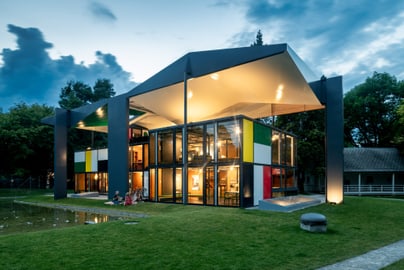
Acquisition of the Pavillon Le Corbusier
The Museum für Gestaltung Zürich wins the city of Zurich’s competition for the content and operation of the Pavillon Le Corbusier and opens it as a public museum after extensive renovations. The pavillion is an architectural masterpiece and the important architect’s final building.
- 2018
Renovation and reopening of the main building
At the end of 2014, the main building on Ausstellungsstrasse is closed for extensive renovation and reopened in 2018. The aim is to preserve the unique character of the building while at the same time adapting it to contemporary museum standards. The exhibition hall with its characteristic columns is restored to its historical, two-story structure. Two new exhibition rooms are built in the basement.
- 2017
Closure of the Bellerive Museum
With the opening of new exhibition spaces and the new collection center at the Toni-Areal, the Bellerive Museum is ceasing its exhibition activities. The Bellerive building is now home to the ZAZ Zurich Architecture Center.
- 2014
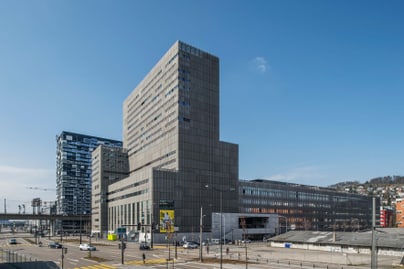
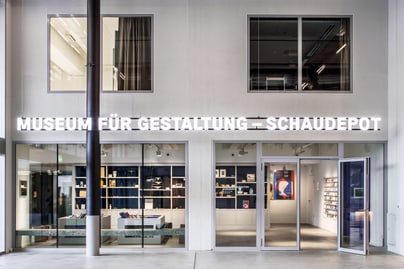
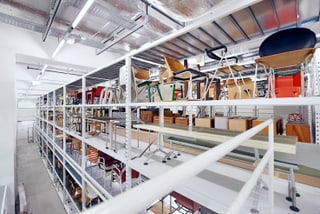
Opening of the Toni-Areal as a new location
Together with the Zurich University of the Arts (ZHdK) and the Zurich University of Applied Sciences (ZHAW), the museum moves into what was once the largest milk processing plant in Europe, which is transformed into a campus. After many years of effort the museum finally manages to unite its holdings—spread across different buildings—under one roof and under ideal conservation conditions.
- 2012
Start of an International Tour
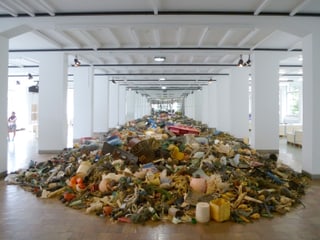
With the final destination being the ocean—the Plastic Waste Project—the museum has created a traveling exhibition exploring the use of plastic in everyday life and the pollution of the oceans. The exhibition will subsequently be shown in 33 cities across four continents.
- 2008
Founding of the Friends of the Museum
The Friends of the Museum enable the ongoing support and expansion of the museum’s collection. The Friends’ publications have become a key component of its support initiatives.
- 2002
Digitization of the Collection
The museum has begun digitizing its collection and publishing it on eMuseum.ch. Today, over 125,000 objects are available online.
- 2000
Sponsorship goes to the Canton of Zurich
Sponsorship of the museum is transferred from the city of Zurich to the Canton of Zurich.
- 1989
Expansion of the Industrial Design Collection
The museum is expanding its product design collection with a focus on Swiss design, while also incorporating significant design objects from the United States and Japan. This expansion enhances the museum’s international reputation and consolidates its position as Switzerland’s leading institution in the field of design.
- 1987
Founding of the Product Design Collection
The museum expands its collection in product design to include important design objects relevant to Swiss design history.
- 1986-1995
Hard times
The open use of drugs at Platzspitz Park and Letten station puts the museum in a difficult position. At times, employees and visitors have to be escorted from the tram stop to the museum.
- 1968
Opening of the Museum Bellerive
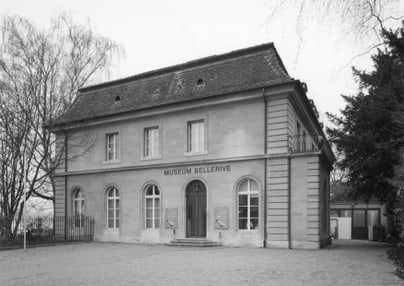
The second location, the Museum Bellerive on Lake Zurich, is opened, which focuses on crafts. Erika Billeter becomes the first woman to direct the museum. The exhibition ends in February 2017 when the Museum Bellerive is returned to the city of Zurich.
- War years 1939-1945
Isolation and cooperation
During the war years, the Kunstgewerbemuseum Zürich is isolated from neighboring countries and works primarily with the Gewerbemuseum Basel and Gewerbemuseum Winterthur. It shows cultural-historical educational exhibitions on everyday objects.
- 1933
Move into the new building on Ausstellungsstrasse
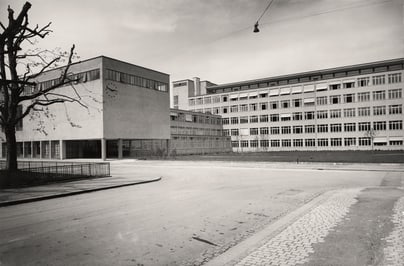
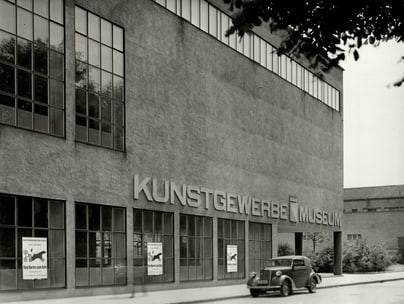
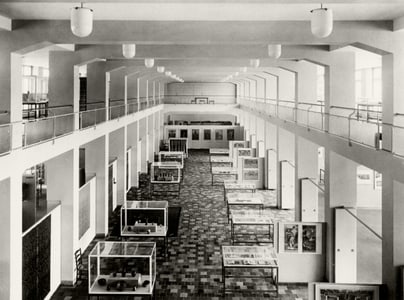
The museum and the School of Applied Arts move into a new building at Ausstellungsstrasse 60. Designed by Adolf Steger and Karl Egender, it is considered a typical example of the modern architecture of the “ Neues Bauen ” movement and remains a characteristic building of the industrial district to this day.
- 1920s
Focus shifts to modern design
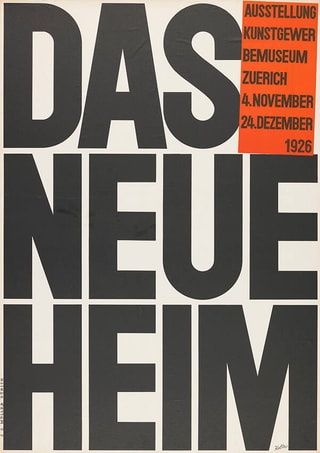
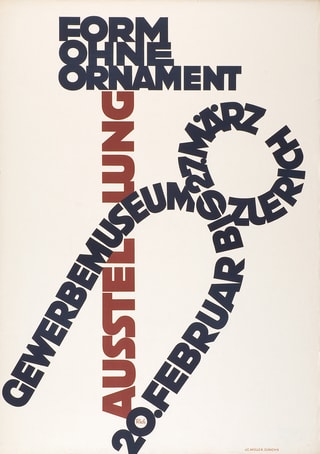
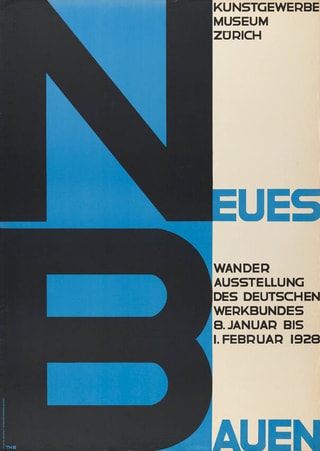
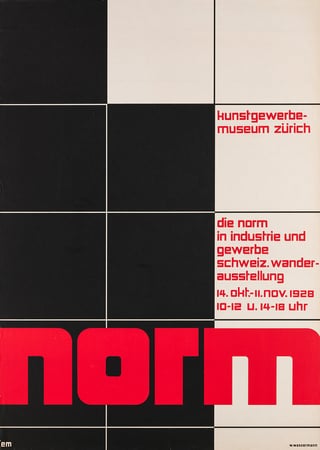
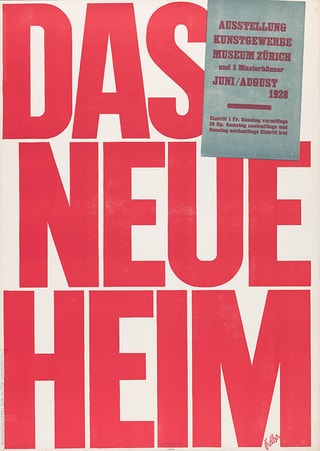
The museum increasingly focuses on modern design trends and craft developments of the 20th century. Director Alfred Altherr organizes several exhibitions on contemporary design within the space of two years, including Das Neue Heim (1926/28), Form ohne Ornament (1927), Neues Bauen (1928) and Die Norm (1928).
- 1910s
Art Nouveau is a focal point of the collection
In the 1910s, the focus of the collection shifts to Art Nouveau and the Arts and Crafts movement, with important works by artists such as William Morris and Émile Gallé. The director at this time, Belgian Jules de Praetere, shows great enthusiasm for this era. He succeeded in reorienting the museum and establishing it in society.
“The Belgian Jules de Praetere was the director who sold off all the old historicist stuff from the decorative arts collection. De Praetere took the proceeds, went to Paris, and bought exquisite Art Nouveau pieces on a grand scale and with great expertise. That was bold! Unimaginable from today’s perspective. Today, however, nearly our entire Art Nouveau collection stems from that initiative. That was one of the museum’s major catalysts.”
Christian Brändle, Director
- 1907
Renamed to the Kunstgewerbemuseum Zürich
In 1907, the museum is officially named “ Kunstgewerbemuseum Zürich ” (Zurich Museum of Applied Arts) in order to enhance its international profile.
- 1902
Closure of the museum and exhibition rooms
Due to an outdated design collection and lacking political will, the museum’s exhibition rooms are closed for almost four years. During this time, the museum has to develop new collection strategies in order to integrate pioneering works.
- 1900s
Start of the graphic collection
In the 1900s, the museum begins to build up a collection of graphic prints, whose uses include serving as illustrative material for teaching purposes.
- 1898
Move to the National Museum in Zurich
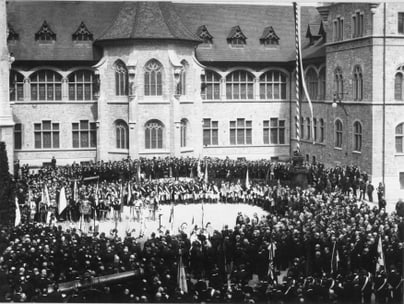
Due to lack of space, the museum moves into the east wing of the newly built National Museum in 1898. It remains here until 1933 and was able to expand and enlarge its collections and exhibition space thanks to the additional rooms.
- 1878
Opening of the Gewerbeschule Zurich
The Gewerbeschule is founded as an integral part of the museum and plays a decisive role in training students of design professions from then on. Classes begin on May 3, 1878. It later develops into the School of Applied Arts, the University of Art and Design (HGKZ) and finally, in 2007, the Zurich University of the Arts (ZHdK).
- 11/01/1875
Founding of the Gewerbemuseum Zürich
The Gewerbemuseum Zürich is founded with the aim of promoting crafts and applied arts and to serve as a teaching center for craft and design. On November 1, 1875, the museum first opens in the buildings Friedensgasse 5 and 7. It hosts a small collection, a reading room and an information office.