Exhibition
The Architecture of Power
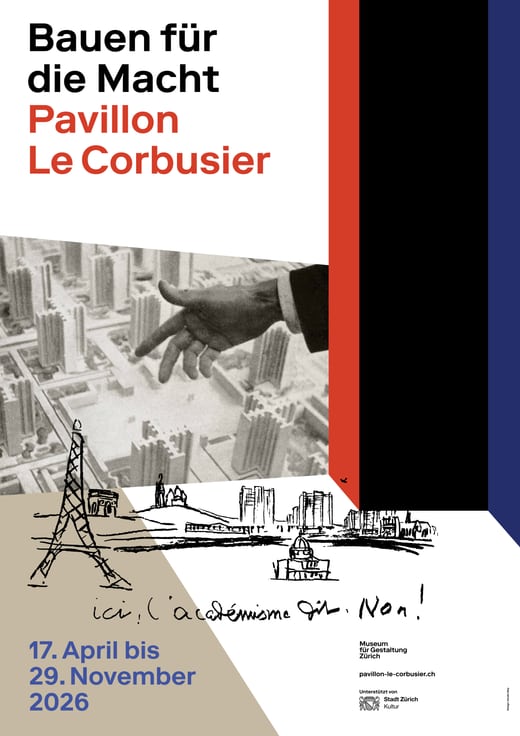
Architecture as a tool of power: Through their form, scale, and symbolism, monumental buildings set the stage for political power. The exhibition sheds light on this questionable tradition based on Le Corbusier’s designs and visions.
- date
- address
- Höschgasse 88008 Zurichopen Google MapsExternal link
- admission
- regular CHF 15
- reduced CHF 10
- free for everyone every Thursday from 5pm
- free under 20 years
About the exhibition
Architecture and power have always felt a mutual attraction. Monumental buildings make power visible and consolidate its representation. In return, architects receive major commissions and fame while enjoying the long-term impact of their designs. Throughout history, this symbiosis has produced imposing buildings that are at times frightening to behold. Intimidating dimensions, monumental axes, and the formal language of antiquity are typical means employed in the architecture of power.
Le Corbusier (1887–1965) pursued major commissions throughout his life. His urban visions are by turns fascinating and disturbing. Especially in the interwar period, he proposed projects whose architecture signaled the aim to reorganize society—while in his search for potential clients he repeatedly failed to maintain a critical distance from fascism. Le Corbusier thus embraced a controversial architectural tradition that still resonates today.
Supported by

Impressions
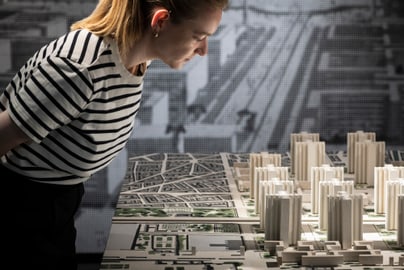
«Ausstellung «Bauen für die Macht» des Museums für Gestaltung Zürich zeigt: Le Corbusier hat die Nähe zu Mächtigen gesucht.»
«Antrieb war Brändle die in den letzten Jahren nicht enden wollende Kritik am Architekten. In Büchern und Artikeln warf man ihm vor, ein Faschist und Nazi gewesen zu sein. In Zürich verweigerte man ihm aus diesem Grund einen nach ihm benannten Platz. Nun kann Brändle ein differenzierteres Bild präsentieren.»
NZZ am Sonntag, 19.4.2026
«Die Schau untersucht die enge, teils beunruhigende Beziehung zwischen Architekt*innen und politischen Strukturen und macht sichtbar, wie eng Entwurf, Ideologie und politische Ordnung miteinander verflochten sind. Anhand ausgewählter Projekte zeigt sie, wie Architektur Macht räumlich übersetzt, Ordnung formt und legitimiert.»
Swiss Arc Mag, 20.4.2026
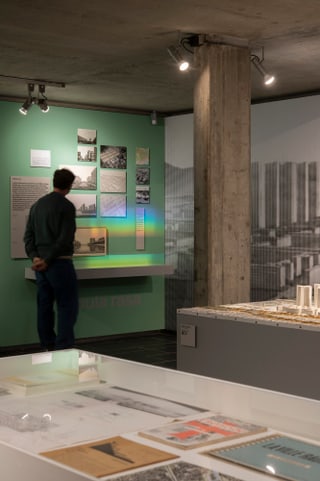
«Ausstellung «Bauen für die Macht» des Museums für Gestaltung Zürich zeigt: Le Corbusier hat die Nähe zu Mächtigen gesucht.»
«Antrieb war Brändle die in den letzten Jahren nicht enden wollende Kritik am Architekten. In Büchern und Artikeln warf man ihm vor, ein Faschist und Nazi gewesen zu sein. In Zürich verweigerte man ihm aus diesem Grund einen nach ihm benannten Platz. Nun kann Brändle ein differenzierteres Bild präsentieren.»
NZZ am Sonntag, 19.4.2026
«Die Schau untersucht die enge, teils beunruhigende Beziehung zwischen Architekt*innen und politischen Strukturen und macht sichtbar, wie eng Entwurf, Ideologie und politische Ordnung miteinander verflochten sind. Anhand ausgewählter Projekte zeigt sie, wie Architektur Macht räumlich übersetzt, Ordnung formt und legitimiert.»
Swiss Arc Mag, 20.4.2026
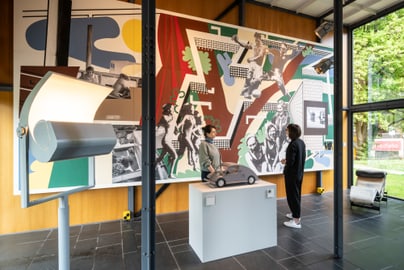
«Im Mittelpunkt der lebendig gestalteten, mit Fotos, Plänen, Autographen und Publikationen reich bestückten Schau stehen Le Corbusiers städtebauliche Visionen. Darauf werden in einem zweiten Teil seine Bemühungen vor Augen geführt, von politischen Machthabern große Aufträge zu erhalten – dass diese nicht ganz unbekannten Ambitionen erstmals im Zusammenhang gezeigt werden, ist ein Verdienst der Ausstellung.»
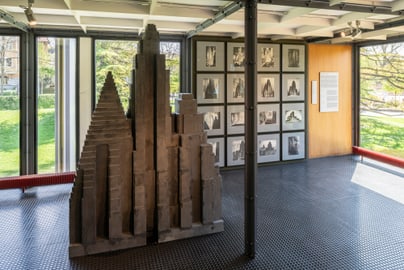
«Ausstellung «Bauen für die Macht» des Museums für Gestaltung Zürich zeigt: Le Corbusier hat die Nähe zu Mächtigen gesucht.»
«Antrieb war Brändle die in den letzten Jahren nicht enden wollende Kritik am Architekten. In Büchern und Artikeln warf man ihm vor, ein Faschist und Nazi gewesen zu sein. In Zürich verweigerte man ihm aus diesem Grund einen nach ihm benannten Platz. Nun kann Brändle ein differenzierteres Bild präsentieren.»
NZZ am Sonntag, 19.4.2026
«Die Schau untersucht die enge, teils beunruhigende Beziehung zwischen Architekt*innen und politischen Strukturen und macht sichtbar, wie eng Entwurf, Ideologie und politische Ordnung miteinander verflochten sind. Anhand ausgewählter Projekte zeigt sie, wie Architektur Macht räumlich übersetzt, Ordnung formt und legitimiert.»
Swiss Arc Mag, 20.4.2026
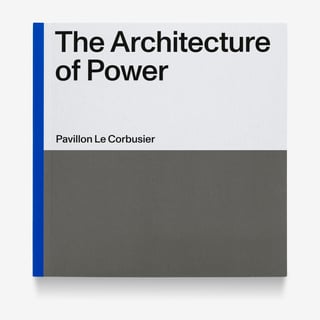
Available for the exhibition
Events
Educational programs
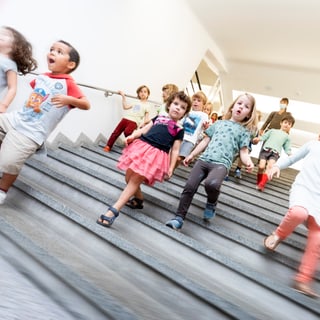
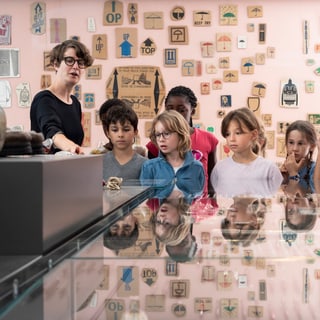
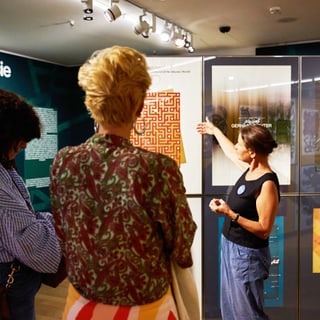
The museum offers a diverse program for adults and young people, children and families, schools, groups, as well as accessible and inclusive offerings.
Digital guide
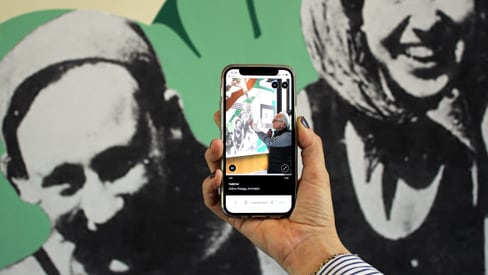
The audio tour explains the facts and background to the building and its significance in Le Corbusier's work in 18 stations.
